01
Data availability
Identify the fields available for the selected carriers, lanes, modes, and reporting period.

Ship Smart Solutions helps customers review routing, consolidation, mode selection, capacity planning, warehouse handoffs, and available shipment data without presenting unmeasured outcomes as facts.
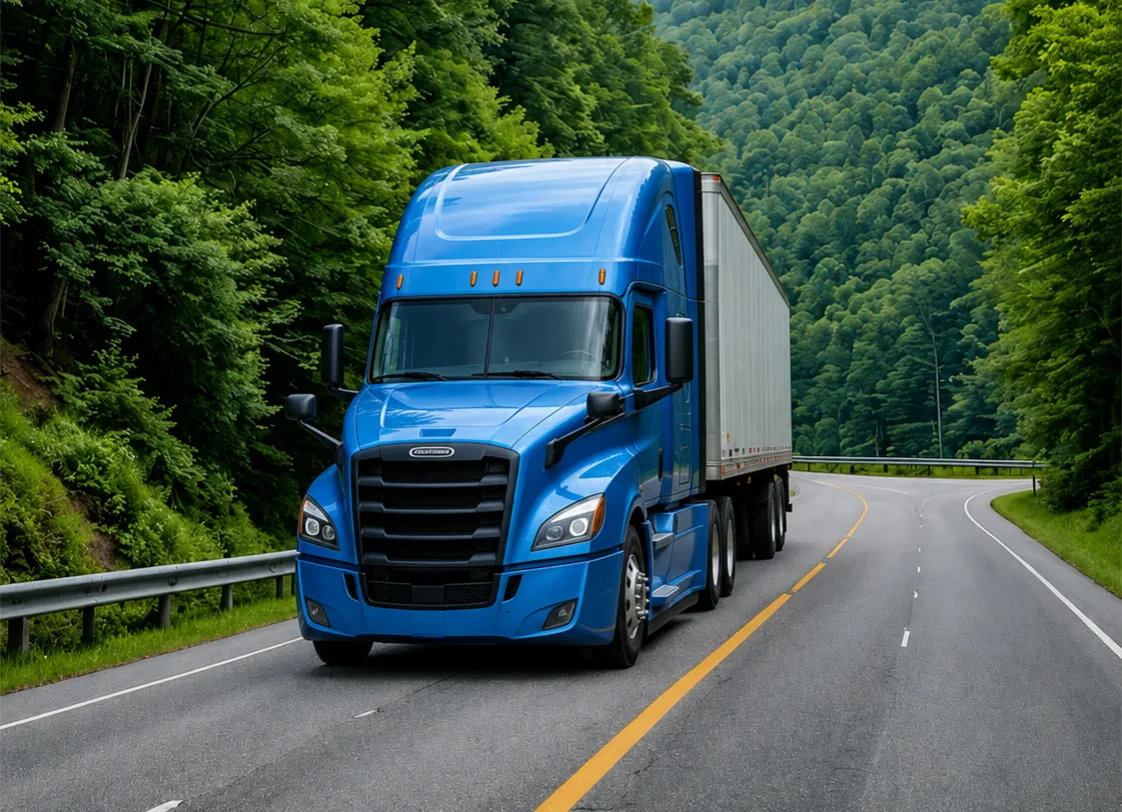
Operational and environmental considerations are reviewed together.
Reporting scope and assumptions should be clear.
No carbon-neutral or zero-emission promise is implied.
Mode, route, capacity, and service constraints still apply.
A review should balance environmental objectives with delivery commitments, product protection, cost, and customer requirements.
Compare approved truck and intermodal options where the lane and freight are suitable.
Review compatible shipments subject to timing, handling, and service requirements.
Evaluate avoidable miles or stops as part of the freight review.
Match the equipment and available capacity to the shipment profile.
Clarify which shipment, carrier, mileage, mode, or emissions-related fields can actually be shared.
Any future metric should state what was measured, what was estimated, the reporting period, the boundary, and the method.
01
Identify the fields available for the selected carriers, lanes, modes, and reporting period.
02
Define the calculation method, assumptions, included operations, and excluded operations.
03
Balance efficiency with timing, handling, product protection, and customer commitments.
04
Use “we can evaluate” or “ask about available reporting” when a result has not been measured.
A review is a planning exercise, not a carbon-neutral, zero-emission, or guaranteed-reduction claim.
01
Set the objective
Identify the service, reporting, or procurement requirement.
02
Gather available data
Clarify actual fields, estimates, assumptions, and time period.
03
Compare practical options
Review mode, routing, consolidation, capacity, and handoffs.
04
Document the scope
Record the selected plan, limits, method, and available reporting.

No. Efficiency, routing, mode, equipment, and reporting work does not create a carbon-neutral claim. Such a claim requires a separate documented methodology.
Intermodal may be worth evaluating for suitable lanes and freight, but the outcome depends on the actual route, terminals, equipment, timing, and operating conditions.
Available data and reporting can vary by carrier, lane, mode, and program. The fields, methodology, scope, and cadence must be confirmed before they are represented as available.
SmartWay is a U.S. EPA freight-efficiency program. Any company partner status or logo language should use the exact, current wording approved for that organization.
We will help frame practical options and clarify what can be measured or reported for the program.